5 Key Steps to Enhance Medical Air Applications

Introduction

Clean, high-quality air is critical in healthcare environments. Even microscopic contaminants can endanger patient outcomes and compromise equipment reliability. Chemical air dryers and advanced filtration systems are essential for creating and maintaining sterile, safe conditions in medical facilities. This article breaks down key considerations, best practices, and technical insights for optimizing your medical air setup.

Why Choose Chemical Air Dryers for Medical Air?

Chemical air dryers play a crucial role in:

  • Moisture control: Preventing the buildup of humidity that encourages microbial growth.
  • Contaminant removal: Filtering out harmful particles and pathogens.
  • Equipment protection: Reducing wear on sensitive medical instruments and air-driven systems.
  • Regulatory compliance: Ensuring your facility meets strict healthcare air quality standards.

Desiccant and refrigerated dryers offer unique advantages, and selecting the right option ensures operational integrity and patient safety.

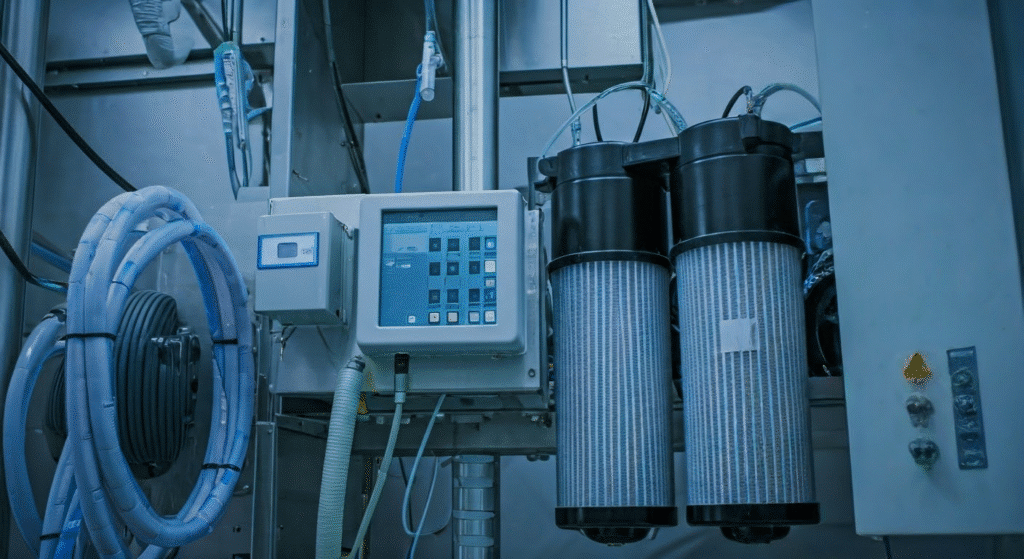
Medical air applications installation with dryers and filters

Key Benefits

  • Consistent Dew Points: Properly sized dryers maintain reliable low humidity levels, preventing moisture-related issues.
  • System Longevity: Reduced contamination extends the life of downstream equipment.
  • Energy Efficiency: Optimized dryer performance minimizes energy usage while maintaining required air quality.
  • Infection Control: Clean air lowers the risk of airborne infections, critical in operating theaters and ICUs.
  • Compliance Confidence: Systems designed to meet ISO 14644 and similar standards ensure audit-readiness.

Installation Insights & Common Pitfalls

Avoid These Installation Mistakes

  • Oversized Airflow: Too much air overwhelms the media, increasing dew points.
  • High Velocity Damage: Excess flow can create fluidized beds, degrading media into abrasive dust.
  • Temperature Overruns: Inlet air that’s too hot reduces adsorption efficiency—every 5°C rise demands a doubling of media mass.
  • Oil Contamination: Use upstream activated carbon filters to prevent oil intrusion.

Receiver Positioning Tips

  • Place the air receiver before the filter/dryer bank.
  • Benefits include better compressor signal control, contaminant dropout, and airflow stabilization.
  • Paint receivers white and place on the coolest side of the building for maximum water removal.

Proper Filter Installation Practices

  • No Parallel Filters: Uneven airflow leads to premature element failure and increased maintenance.
  • Follow Airflow Direction: Core-to-outside airflow preserves filter element integrity.
  • Use Certified Filters: HEPA and activated carbon filters meet high-efficiency and pathogen capture requirements.

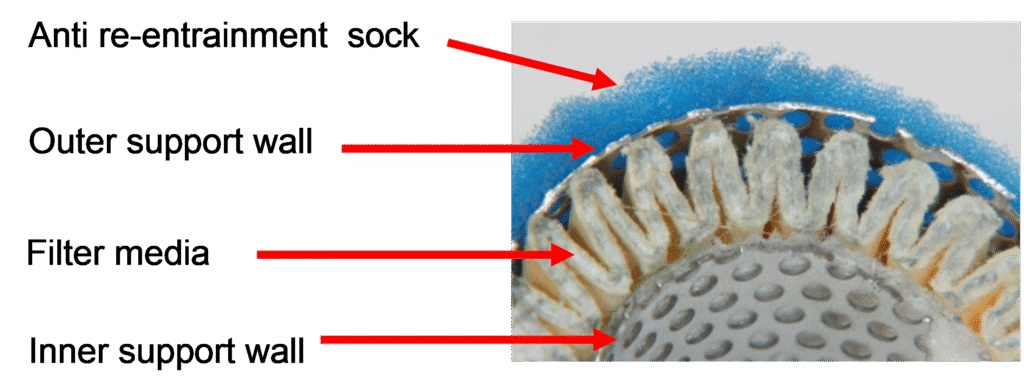
Note, air flow is from inside the core to outside

Like air dryers, filters should not be operated in parallel, if this is attempted it leads to short element life cycles and rising maintenance expenditure. It is impossible to direct equal air flow through two or more inline filters when operated on parallel.

The element with the lowest pressure drop will lead to a priority air flow through it. This in turn leads to premature element failure and anti-entrainment sock disintegration. Element failure means now effective filtration of polluted airlines. Sock failure leads to material being carried downstream into the air system. There it will foul equipment and cause general mayhem!

Medical Air Compressor room layout

Typical Air Compressor Room Layout – Side Elevation

Room Design & Environmental Considerations

  • Maintain 1.5 meters of service clearance around equipment.
  • Ensure good ventilation—avoid exhaust air recirculation.
  • Install low-level inlets and high-level outlets for natural airflow.
  • Keep compressor rooms clean, well-lit, and cool for performance and safety.

Air dryers should be installed in a well-ventilated area that provides cool air to the compressors and in turn reduce air inlet temps to the dryer. A 1.5-meter free access area around the dryer is required to allow service technicians to maintain any part of the dryer.

Care should be taken that compressors do not exhaust hot air onto an air dryer. Hot waste exhaust air should be exhausted outside the compressor house. See drawing. As a good indication of a well-constructed compressor room, if you are sweating inside the compressor room, the ventilation is poor. Change it!

Have cooling air inlets installed at low levels (South side) with the discharge vents on the opposite side of the room at high level, designed for “through flow”ventilation.

Ensure that there is plenty of natural light and floodlights for nighttime repairs or supervision. Ensure that the room is kept spotless it will promote good workmanship on the equipment, no one will dare to leave the room in a mess.
 

Maintenance Tips

  • Inspect Frequently: Check filters and dryers regularly for performance drops or wear.
  • Drain Receivers: Every 4 hours (or as needed) to prevent water buildup.
  • Replace Filters: Follow manufacturer intervals or earlier if pressure drops increase.
  • Record Everything: Keep logs to support audits and troubleshoot future issues.

There are many theories on how to install air dryers; the following is a brief overview of the dos and don’ts of air dryer and filter installation.

Like its mechanical cousin, the adsorption air dryer will suffer if installed incorrectly. In the case of chemical air dryer’s the effects show up as high dew points or mechanical problems.

  • Too much-compressed air flowing through a dryer – will cause higher dew points (wetter air) as the air will choose the path of least resistance. In other words, the dryer/filter bank with the lowest pressure drop will get the biggest airflow. This means that the media is trying to adsorb more water than it was designed for. This situation leads to the upper “dry zone” becoming saturated and the dryer will be unable to regenerate the offline vessel.
  • Too much-compressed fluidized air flowing through a dryer, which will create high velocity, can cause the media to “hover” in the air stream within the pressure vessel (fluidised bed) this will cause the adsorption media to rub together and it can degrade to talcum powder like consistency, this is not nice in an airline, the resultant dust is very abrasive and difficult to remove from the pipeline!
  • High inlet air temperatures can also affect the ability of the chemical affect to adsorb water, in theory for every extra 5° above design temperature the chemical bed weight should be doubled ro achieve the same design dew point.
  • Due to the problems associated with oil carry over into low dew point chemical dryers, it is prefereable to  install oil free air compressors & consider activated carbon towers upstream of adsorption dryers to prevent contamination of the distribution system. Hydro Carbons be sucked into  air compressors from nearby highways or  adjacent  facilities or even vacum pump  exhausts  in the plant room.

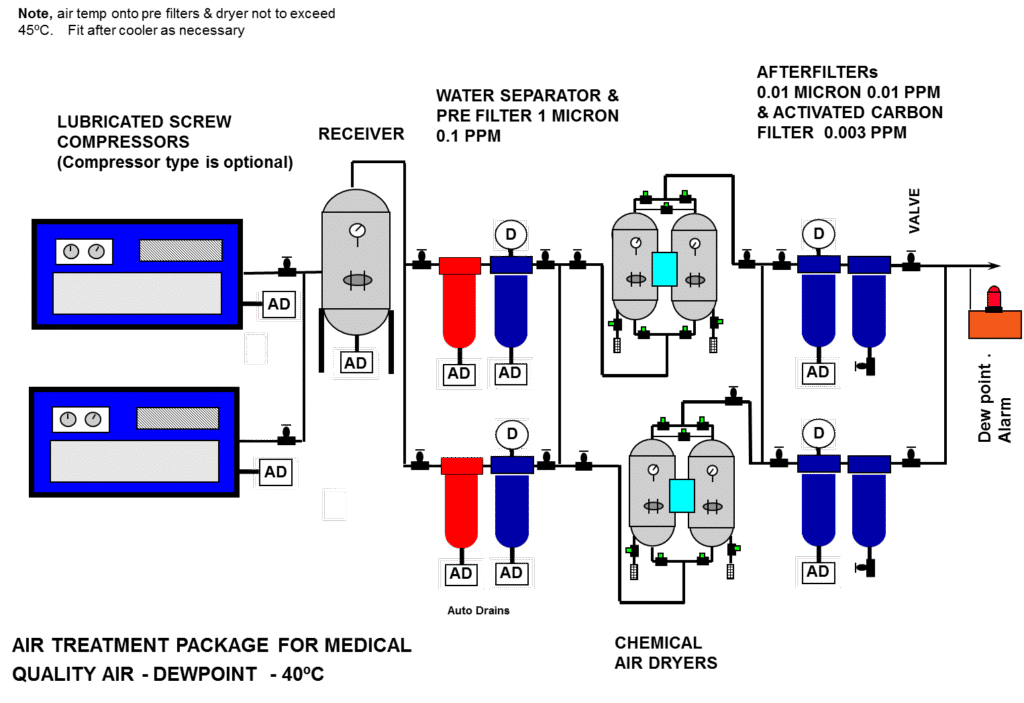
In the medical layout below, the dryers should only be operated as a set, 1 running and 1 set in back-up isolated for the system.
Frequently Asked Questions

What are the health risks of poor air quality in hospitals?
Increased respiratory infections, allergic reactions, and compromised immunity in patients and staff.

Can I install filters in parallel?
No. Parallel filters lead to unequal airflow, reduced efficiency, and premature failure.

How do desiccant dryers help in healthcare?
They maintain low dew points, reducing microbial risks and supporting equipment reliability.

What standards should filters comply with?
ISO 14644, HEPA specifications, and local medical air compliance regulations.

Conclusion

High-performance air dryers and filters are essential for medical air applications. By adhering to correct installation practices and prioritizing ongoing maintenance, healthcare facilities can safeguard both patient health and operational efficiency. Whether you’re planning a new install or auditing an existing setup, always align your system with industry standards and best practices.

Contact us to learn more or to request a custom system assessment.